Discover the proposed small-scale data center at 713 Ralph David Abernathy
WOULD YOU LIKE TO SEE THIS KIND OF IMPROVEMENT IN YOUR NEIGHBORHOOD?

The proposal at 713 Ralph David Abernathy Boulevard SW is for a small-scale colocation data center on an older industrial property.
This is not a massive hyperscale data center campus. It is a proposed redevelopment of an existing site in a difficult industrial area near major transportation infrastructure.
The public discussion is about whether this site can be reused responsibly, with clear answers about zoning, traffic, water, power, cleanup, neighborhood impact, and community investment.

The proposal is for a small-scale colocation data center.
A colocation data center is a secure building where businesses place computer servers and digital equipment. Those servers help support websites, apps, cloud storage, online banking, school portals, hospital systems, video calls, artificial intelligence tools, and other digital services.
This kind of facility is not a shopping center, apartment building, warehouse, or factory. It is digital infrastructure.

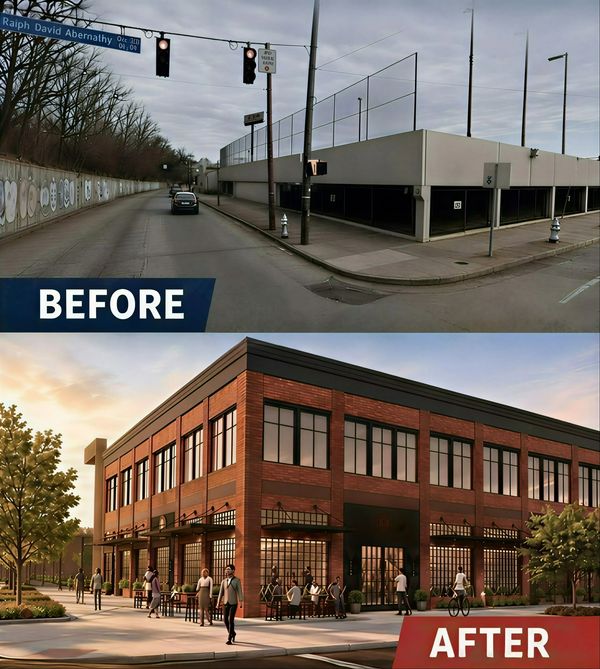
The 713 Ralph David Abernathy Boulevard site is an older industrial property.
The question before the public is whether this existing industrial site can be reused in a responsible way.
Redevelopment can put a difficult property back into productive use. It can also create an opportunity to address site conditions, improve the area, and bring new investment.
This proposal is not for a huge hyperscale data center campus.
A hyperscale data center is usually much larger and often built for one major technology company or cloud provider.
The 713 Ralph David Abernathy Boulevard proposal is being described as a small-scale colocation data center. That distinction matters because not all data centers are the same size, use, or impact.
The project needs public review because it involves Atlanta zoning rules.
The zoning issue is connected to SPI-21 Subarea 9 and the proposed ordinance for 713 Ralph David Abernathy Boulevard.
That means the project is going through a public process where city officials, residents, and stakeholders can review the proposal, ask questions, and speak on the record.

A data center is a building that holds computer servers, storage systems, and networking equipment.
Data centers help run digital services people use every day, including:
Online banking
School portals
Hospital systems
Telehealth
Cloud storage
Business websites
Video calls
Artificial intelligence tools
Government services
Emergency communication systems
Most people use data centers every day without seeing them.

Data centers matter because modern life depends on digital systems.
When people use phones, apps, websites, online forms, video calls, health portals, school portals, or AI tools, that information often depends on data center infrastructure.
A data center is not just a building with computers. It is part of the infrastructure that helps businesses, schools, hospitals, governments, and families stay connected.
Based on the project information being used for this proposal, the small-scale colocation data center has been described as using a closed-loop cooling system.
A closed-loop system is designed to reuse cooling fluid inside the system instead of constantly drawing large amounts of new water.
That means this project is not being presented as a large water-consumption project.
No public material being used for this project says coolant would be dumped into the neighborhood.
In a closed-loop system, coolant stays inside the system. If coolant ever needs to be replaced or removed, it is handled as a maintenance and disposal matter under applicable rules.
It is not poured into streets, storm drains, or the community
The materials being used for this project do not show the small-scale colocation data center as a high-truck-traffic use like a warehouse, factory, shopping center, or distribution center.
A colocation data center is not open to daily customers. After construction, daily operations usually involve staff, maintenance, security, and service access.
Construction traffic is different from normal daily use. Construction traffic should be managed during the construction period.

The main noise question for a data center usually involves mechanical equipment, backup systems, and cooling systems.
The materials being used for this article do not include a final noise report.
The practical answer is that noise should be managed through design, equipment placement, screening, and compliance with city rules.
A colocation data center is a secure infrastructure facility.
It is not a public shopping center, public office, restaurant, apartment building, or walk-in service location.
The public value is not public access to the building. The public value comes from responsible reuse of the site, digital infrastructure, tax impact, cleanup, community investment, and written project commitments.
A small-scale colocation data center may create construction jobs during the building phase and permanent jobs connected to operations, security, maintenance, technical support, and facility management.
It will not create the same kind of walk-in retail jobs as a shopping center.
The better jobs question is whether the project can support workforce connections, training, local hiring opportunities, or partnerships tied to the community.
The project can help the community if investment is tied to clear public commitments.
Possible community benefits may include site cleanup, reuse of an older industrial property, infrastructure improvements, workforce opportunities, youth programs, small business support, beautification, environmental protections, and public reporting.
The strongest commitments are specific, written, and easy for residents to understand.
A general promise is not enough.
The public should be able to understand what is being offered, who is responsible, and how progress will be shared.
Written commitments make the conversation clearer. They help residents see the difference between a vague promise and a real project commitment.

Georgia Tech planning materials identified this area as difficult for walking because of large blocks, infrastructure barriers, and poor pedestrian connections.
The planning materials pointed toward redevelopment that could make the area more walkable and easier to navigate.
That matters because the 713 Ralph David Abernathy Boulevard discussion is not only about one building. It is also about whether redevelopment can improve conditions around a difficult site
Supporting this project does not mean ignoring traffic, water, power, noise, construction, cleanup, or accountability.
Support can mean looking at the site as it exists today and asking whether responsible redevelopment is better than leaving the property underused.
People can support investment and still expect clear answers.